Injuries
Can You Keep Lifting With an Old Shoulder or Knee Injury?
Usually yes. Training around an old injury means choosing the lift variation, range and load the joint tolerates, and progressing one thing at a time.
Dr. LaMar Sheppard, DC · October 27, 2026 · 4 min read
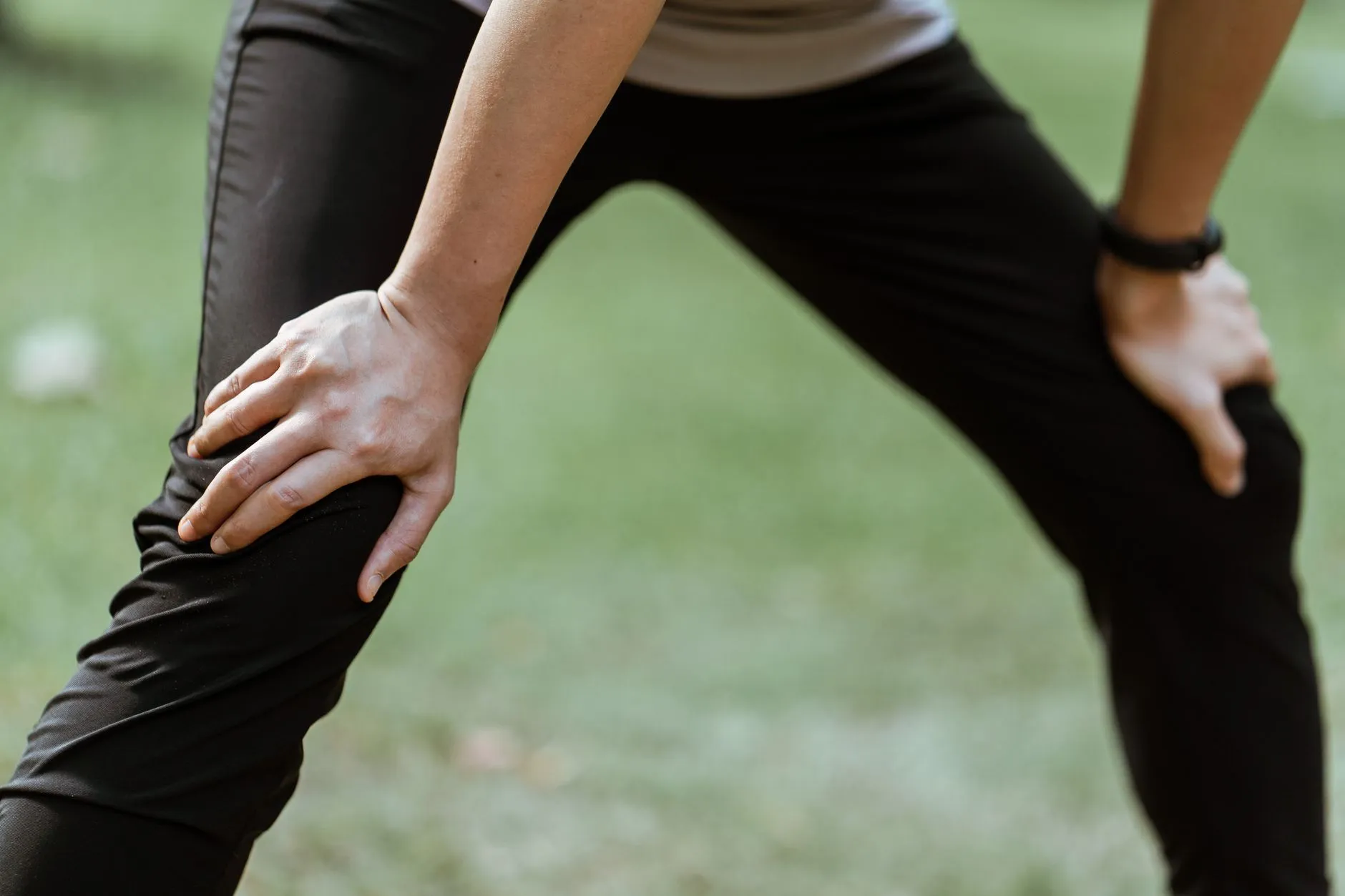
Can you keep lifting with an old shoulder or knee injury after 45? Usually yes. Training around an old injury does not mean stopping. It means choosing the version of each lift the joint tolerates today, loading it in a way the joint can absorb, and progressing only while it stays quiet. Stopping entirely usually costs strength, and the old injury is often still there when you return.
Why does an old injury flare when you train?
An old shoulder or knee injury rarely flares because of one bad rep. It flares because the program asks for more than the tissue can handle that week: a jump in load, a new exercise at full range, a block of extra volume, or a hard session after four hours of sleep and a red-eye flight. The joint is not broken. It has a lower ceiling than the rest of you, and a generic plan does not know where that ceiling is.
That is why the same program that suits a 30-year-old can cost a 52-year-old a month. A templated plan that calls for heavy overhead pressing or deep loaded lunges in week four has no idea that one shoulder was dislocated in college or that a knee was scoped fifteen years ago.
What does training around an old injury actually look like?
It looks less dramatic than people expect. For a cranky shoulder, overhead pressing might become a landmine press, and a flat barbell bench might become a neutral-grip dumbbell press with a slightly shorter range. For an old knee injury, a back squat might become a box squat to a height the knee accepts, with split squats and sled pushes carrying more of the leg work. The movement pattern stays. The angle, range and load change.
Three rules do most of the work:
- Pick the variation the joint tolerates now. Not the one it tolerated at 35, and not the one in the app.
- Use a simple pain rule. Mild discomfort that settles by the next morning is usually acceptable. Pain that builds during a set, changes how you move, or is worse the next day means the load or range was too much.
- Progress one thing at a time. Add load, or range, or volume in a given week, not all three.
The CDC notes that physical activity can help people with arthritis reduce joint pain and improve function, and suggests weights or resistance bands that do not trigger joint discomfort, increased gradually (CDC, Physical Activity and Arthritis). Strength work is part of how you look after an old joint, not something to give up for it.
How much should you train while the joint settles?
Usually more than you think, just not all on the injured joint. The U.S. Physical Activity Guidelines recommend muscle-strengthening activity on at least 2 days each week and 150 to 300 minutes of moderate aerobic activity (ODPHP, Physical Activity Guidelines). A sore shoulder does not stop you deadlifting, and a sore knee does not stop you rowing or training your upper body hard. Keep the rest of the body moving forward while the injured joint works at its own pace.
A realistic week for a man with an old knee injury might be three strength sessions of 45 to 60 minutes, two or three easy aerobic sessions on a bike, and one number to track: how the knee feels on the stairs the morning after training. If that number holds steady or improves, the program is working.
How do you tell whether it is working?
Look at the trend over three or four weeks, not the last session. Signs it is working: the joint is quieter the morning after training, the variation you chose feels easier at the same load, and you have not missed a session because of the joint. Signs it is not: you are skipping sessions, the joint aches at rest or at night, or you keep changing exercises to dodge pain without the pain changing.
When does an old injury need a doctor before a program?
Some symptoms are not a programming problem. See your own physician before loading the joint if you notice swelling that appears without a clear reason, a knee that locks or gives way, a shoulder that has started to slip or feel unstable, numbness or weakness down the arm or leg, night pain that wakes you, or a joint that is hot and red. Those need a diagnosis first. Training resumes once you know what you are working with.
How I handle an old injury at Doctor of Strength
At Doctor of Strength, training around old injuries is one of the eight parts of Foundation 90, my 90-day online program for men 45 to 65. I manage the injury inside the program rather than in a separate six-week detour: loads, ranges and exercise choices are adjusted week by week against a 0 to 10 joint score, and the first 30 days run to one standard: nothing flares. I write the training myself and read any imaging you already have alongside it. Coaching is online and nationwide; it is not a substitute for care from your own physician.
If your problem is mainly one joint, two earlier posts go deeper: training with a cranky knee and when a shoulder limits pressing and pulling.
The short version
An old shoulder or knee injury is a reason to change how you train, not whether you train. Choose the variation the joint tolerates, keep a simple pain rule, progress one thing at a time, and keep the rest of the body getting stronger. If you want a plan built around your own history, book a free 15-minute call.
Quick answers
1 Can you keep lifting with an old shoulder or knee injury?
Usually yes. Training around an old injury does not mean stopping. It means choosing the version of each lift the joint tolerates today, loading it in a way the joint can absorb, and progressing only while it stays quiet.
2 Why does an old injury flare when you train?
An old shoulder or knee injury rarely flares because of one bad rep. It flares because the program asks for more than the tissue can handle that week: a jump in load, a new exercise at full range, a block of extra volume, or a hard session after four hours of sleep and a red-eye flight.
3 How do you tell whether it is working?
Look at the trend over three or four weeks, not the last session. Signs it is working: the joint is quieter the morning after training, the variation you chose feels easier at the same load, and you have not missed a session because of the joint.
4 When does an old injury need a doctor before a program?
See your own physician before loading the joint if you notice swelling that appears without a clear reason, a knee that locks or gives way, a shoulder that has started to slip or feel unstable, numbness or weakness down the arm or leg, night pain that wakes you, or a joint that is hot and red. Those need a diagnosis first.
Sources
- Centers for Disease Control and Prevention: Physical Activity and Arthritis
- U.S. Office of Disease Prevention and Health Promotion: Physical Activity Guidelines for Americans, top 10 things to know
General information, not medical advice. Licensed to practice chiropractic in California. Coaching services are provided nationwide and are not a substitute for medical care from your own physician. Prescribing decisions rest with a licensed physician.